

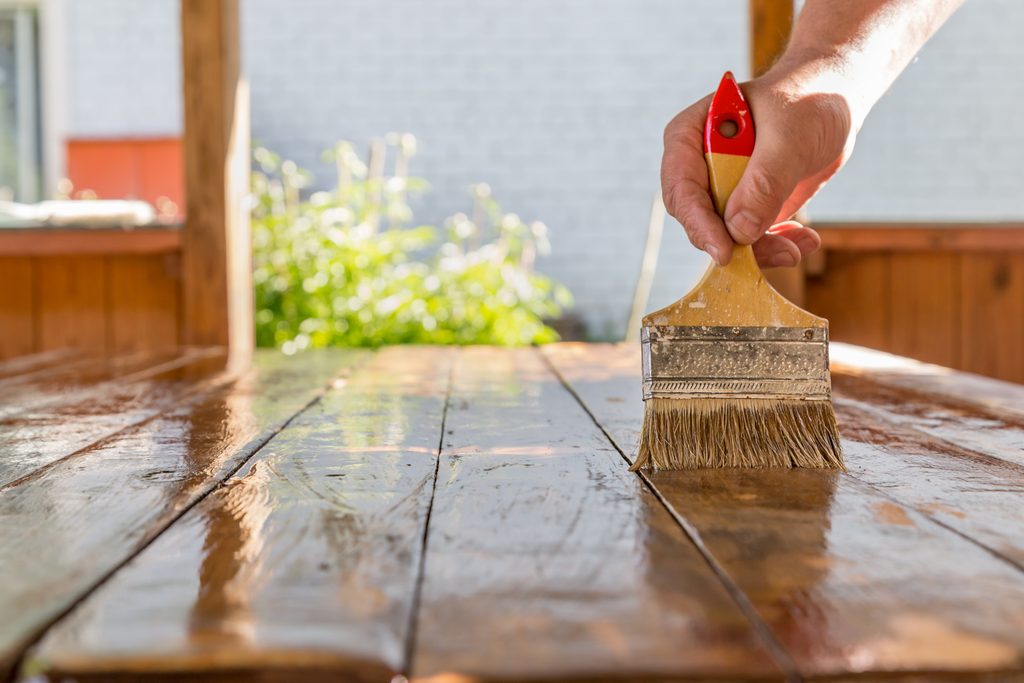
If you have a deck, fence, or other exterior woodwork around your home, the window before cold weather sets in is the most important time to think about staining. In Southwest Michigan, our winters bring snow, ice, and relentless freeze-thaw cycles that can wreak havoc on unprotected wood. A professional exterior stain applied this fall gives your wood surfaces the armor they need to come through the season looking great.
How Michigan Winters Damage Unprotected Wood
Wood is naturally porous, and when it’s left without a protective finish, moisture from rain, snow, and ice works its way deep into the fibers. Once temperatures drop below freezing, that trapped moisture expands. When it thaws, it contracts. This freeze-thaw cycle repeats dozens of times throughout a Michigan winter, and each round puts stress on the wood from the inside out. Over time, you’ll start to see surface checking, cracks, splitting, and loose joints. Eventually, the damage leads to warping, rot, and costly replacements.
It’s not just moisture doing the work, either. UV rays remain a threat even in the colder months, especially when winter sun reflects off snow and ice. That exposure dries out wood fibers, causes graying and fading, and accelerates surface deterioration. Without stain, your deck or fence ages far faster than it should.
Why Staining Now Makes a Difference
A quality exterior stain penetrates the wood rather than simply sitting on top of it. That deeper absorption creates a barrier that limits how much moisture can enter the grain in the first place, which dramatically reduces the damage caused by freeze-thaw cycles. Stain also contains pigments that filter UV light, protecting the wood’s natural color and slowing the breakdown of surface fibers.
Fall in Southwest Michigan offers ideal conditions for staining. The intense summer heat has passed, which matters because high temperatures cause stain to dry too quickly and can lead to an uneven finish with lap marks. Fall’s moderate temperatures and lower humidity let the stain cure properly and bond with the wood before winter arrives. The key is making sure the wood surface is dry, the air temperature stays above 50 degrees during application, and there’s no rain in the forecast for at least 24 to 48 hours after the job is done.
Don’t Wait Until Spring to Deal With Winter Damage
Many homeowners put off staining until spring, but by then the damage is already done. Cracked, warped, or rotting wood needs repair before it can be stained, which means more time, more materials, and a bigger bill. Staining now is a proactive step that protects your investment and saves you money down the road.
Professional application also makes a real difference in how long your stain lasts. Proper surface preparation, the right product for your wood type, and experienced technique ensure an even, durable finish that holds up through the toughest months of the year.
Get Your Free Exterior Staining Estimate
Van Tuinen Painting has been protecting Southwest Michigan homes for over 50 years. If your deck, fence, or exterior woodwork needs staining before the cold sets in, don’t wait. Contact us today at 269-345-4444 or visit vantuinenpainting.com to request your free estimate. Let’s make sure your home is ready for winter.